
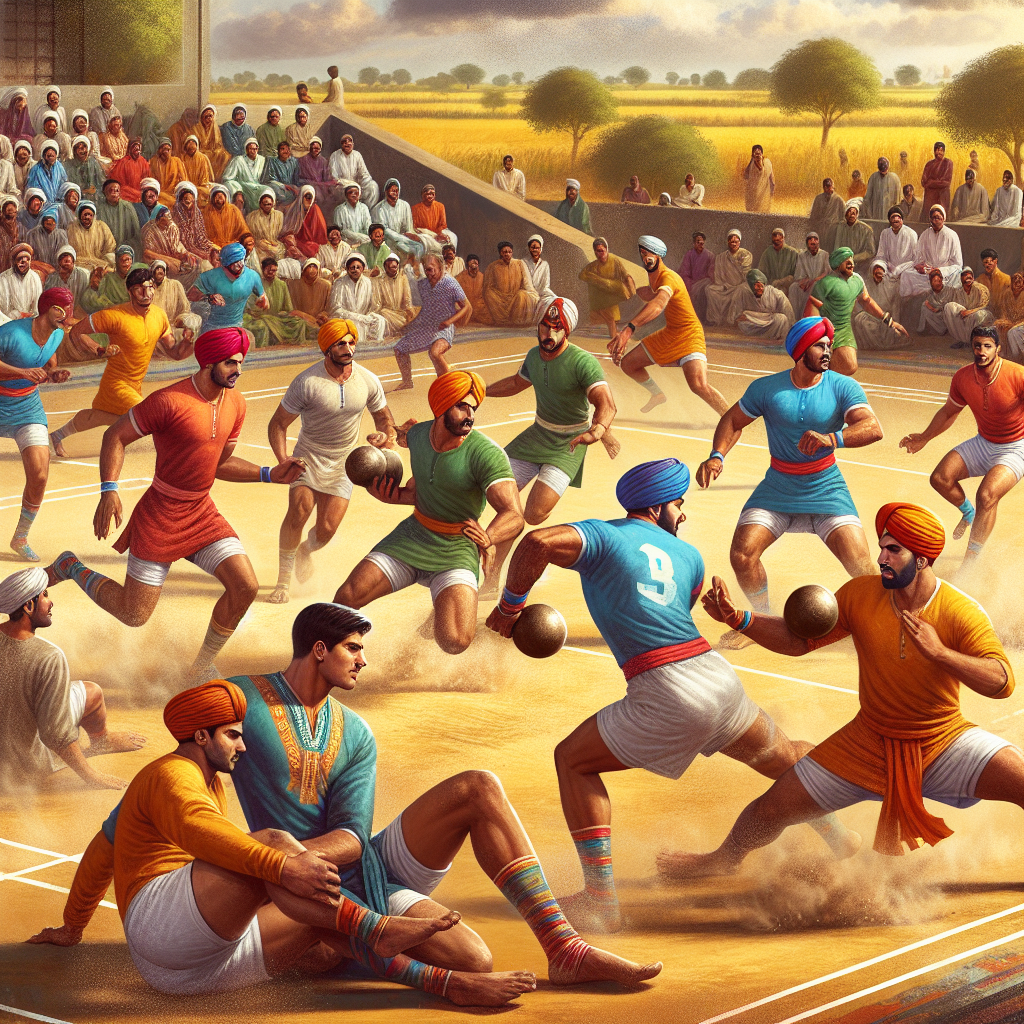
The Essence of Kabaddi
The game of kabaddi is played between two teams, each comprising seven players. The primary objective is for a “raider” to enter the opposing team’s half of the court, tag one or more defenders, and return to their own half without being tackled, all while continuously chanting the word “kabaddi” to prove they are not inhaling. Successful raids earn points for the attacking team, while the defenders score by tackling the raider. This mix of physical contact and breath control makes kabaddi a unique test of endurance and skill.
Historical Roots
Though its precise origins are debated, there are accounts of kabaddi being played in ancient India, with links to traditions dating back to the Vedic period. Legendary figures in Indian history, such as Siddhartha Gautama and Lord Krishna, are said to have engaged in this sport, underlining its long-standing cultural significance. Over time, kabaddi evolved from a recreational activity to a competitive sport, particularly in the 20th century.
Kabaddi’s Popularity
Kabaddi holds a prominent position in South Asia, especially in India and Bangladesh. In India, it’s the state game of many regions and the third most-watched sport after cricket and football. In Bangladesh, it holds the status of the national sport. The game’s appeal lies in its simplicity, the minimal equipment needed, and the intense communal spirit it fosters.
The Modern Era and the Pro Kabaddi League
The Pro Kabaddi League (PKL), launched in 2014, has significantly enhanced the sport’s profile. Drawing inspiration from the Indian Premier League’s business model for cricket, the PKL has embraced a focus on marketing and televised matches, attracting millions of viewers globally. This professional league has introduced new rules to make the game more thrilling and TV-friendly, such as the 30-second raid limit and additional bonus points.
Governance and International Presence
Internationally, kabaddi is governed by several organizations, including the International Kabaddi Federation (IKF) and associations like the World Kabaddi Federation. The IKF was instrumental in organizing the Kabaddi World Cup, which has seen India dominating the scene for decades, though nations like Iran and South Korea are emerging as strong competitors.
Cultural Significance and Variations
Kabaddi is not just a sport but a cultural phenomenon embedded in South Asian tradition. It is also a testament to how ancient games can adapt to modern preferences without losing their historical essence. Variations like “Beach Kabaddi” and “Indoor Kabaddi” indicate the game’s flexibility and appeal across different environments and cultures.
In conclusion, kabaddi is a testament to the rich heritage and evolving nature of traditional sports. As it gains international traction and adapts to new audiences, it continues to be a medium for promoting strength, strategy, and camaraderie across cultures.
