
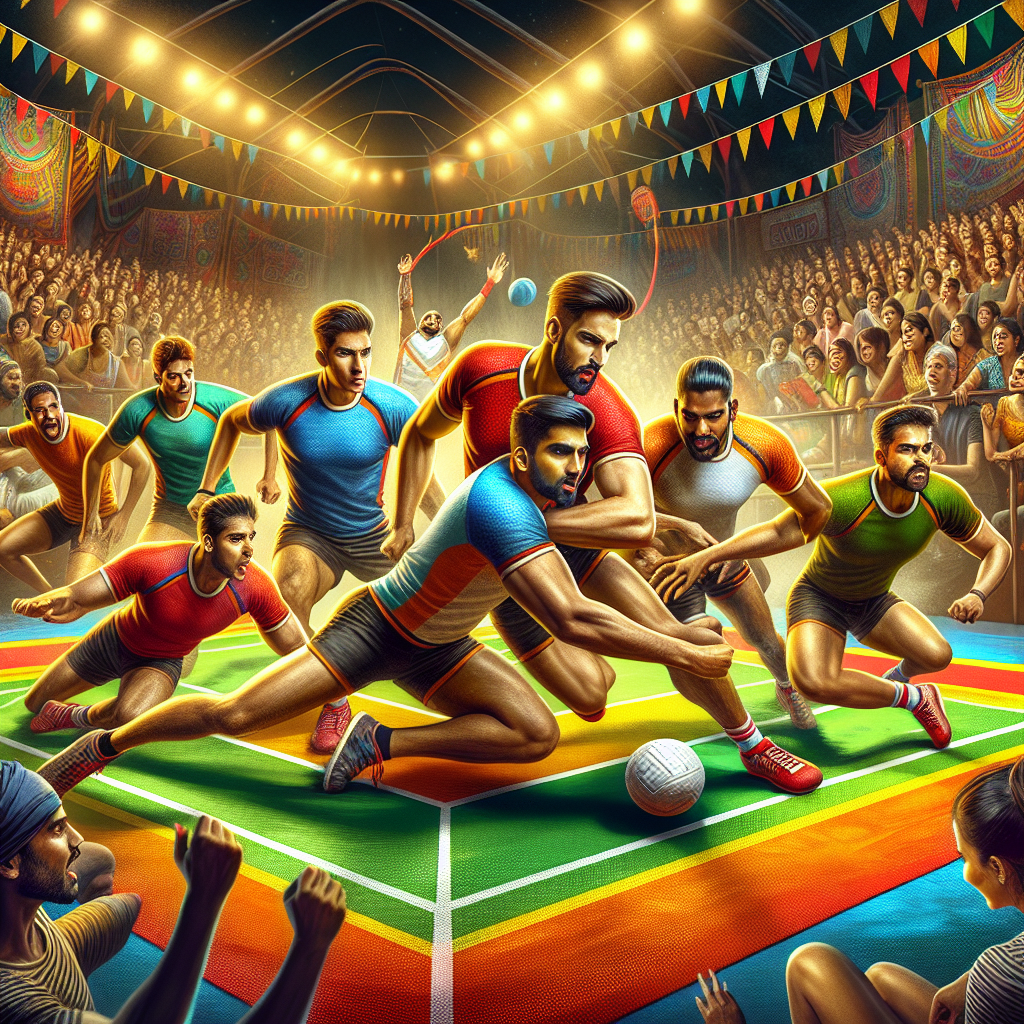
Kabaddi: From Traditional Roots to Global Arena
Kabaddi, a time-honored sport originating from the Indian subcontinent, has navigated its way through history to captivate audiences worldwide. At its core, Kabaddi is an amalgamation of strategy, strength, agility, and endurance. It combines elements of tag and wrestling, where teams strategically send a ‘raider’ into the opposing side to tag as many opponents as possible, all while holding his breath and chanting “Kabaddi, Kabaddi.”
The historical roots of Kabaddi can be traced back over 4,000 years, reflecting a rich heritage unique to India. Traditionally played in rural areas, the sport was a testament to the community spirit, physical fitness, and mental fortitude. However, the global recognition of Kabaddi came much later, aided significantly by international competitions and leagues.
The Pro Kabaddi League (PKL) has been a game-changer in popularizing Kabaddi worldwide. Launched in 2014, this league brought a professional touch to the game, much like what IPL did for cricket. The PKL is known for its exciting matches, star players, and a massive following that transcends national borders. The league’s influence was felt immediately as it highlighted the sport’s potential and brought it into the mainstream sporting arena.
Beyond the spectacle of competition, Kabaddi has also become a cultural bridge. The sport is played in countries across the globe, including Iran, India, South Korea, and several Western nations, each bringing their unique flavor to the game. International competitions such as the Kabaddi World Cup have provided a platform for this cultural mix, showcasing diverse styles and strategies that add to the sport’s allure.
Many aspects make Kabaddi distinct and intriguing to its audience. The absence of equipment, the reliance on agility and teamwork, and the high-octane pace set it apart from other sports. It’s a game of wits and physical prowess, with players needing to anticipate and react within split seconds, making it as mentally taxing as it is physically challenging.
Furthermore, Kabaddi has seen a surge in female participation, highlighting the sport’s inclusive nature. Women’s teams have emerged strong, with players showcasing exceptional skills and inspiring enthusiasm among young girls who see Kabaddi as an empowering pursuit. This inclusion is vital in promoting gender equality in sports, amplifying the reach and depth of Kabaddi’s impact.
In contemporary society, Kabaddi continues to inspire and entertain millions around the world. Its widespread acceptance is a testament to society’s growing appreciation for diverse forms of physical activity and competition. The sport’s rising popularity is also indicative of a broader shift towards recognizing and valuing non-Western sports, breaking traditional molds and encouraging a more global sporting culture.
Educational institutions have also begun promoting Kabaddi as part of their athletic programs, recognizing its benefits in building teamwork, discipline, and physical fitness. This integration within academic settings not only fosters new talent but also ensures that Kabaddi retains its relevance in future generations.
Digital platforms have played a crucial role in Kabaddi’s proliferation by streaming matches live, enabling fans to engage with the sport in real-time, no matter where they are located. The accessibility of Kabaddi content has converted casual viewers into ardent followers who celebrate the sport’s unique features and narratives.
Ultimately, Kabaddi is far more than just a game. It captures the essence of cultural tradition, embodies the spirit of competition, and signifies the progress of sports in the modern era. As its international presence continues to grow, Kabaddi stands as a symbol of passion, community, and resilience, inspiring countless individuals while bringing the world together on a singular, thrilling platform.
