
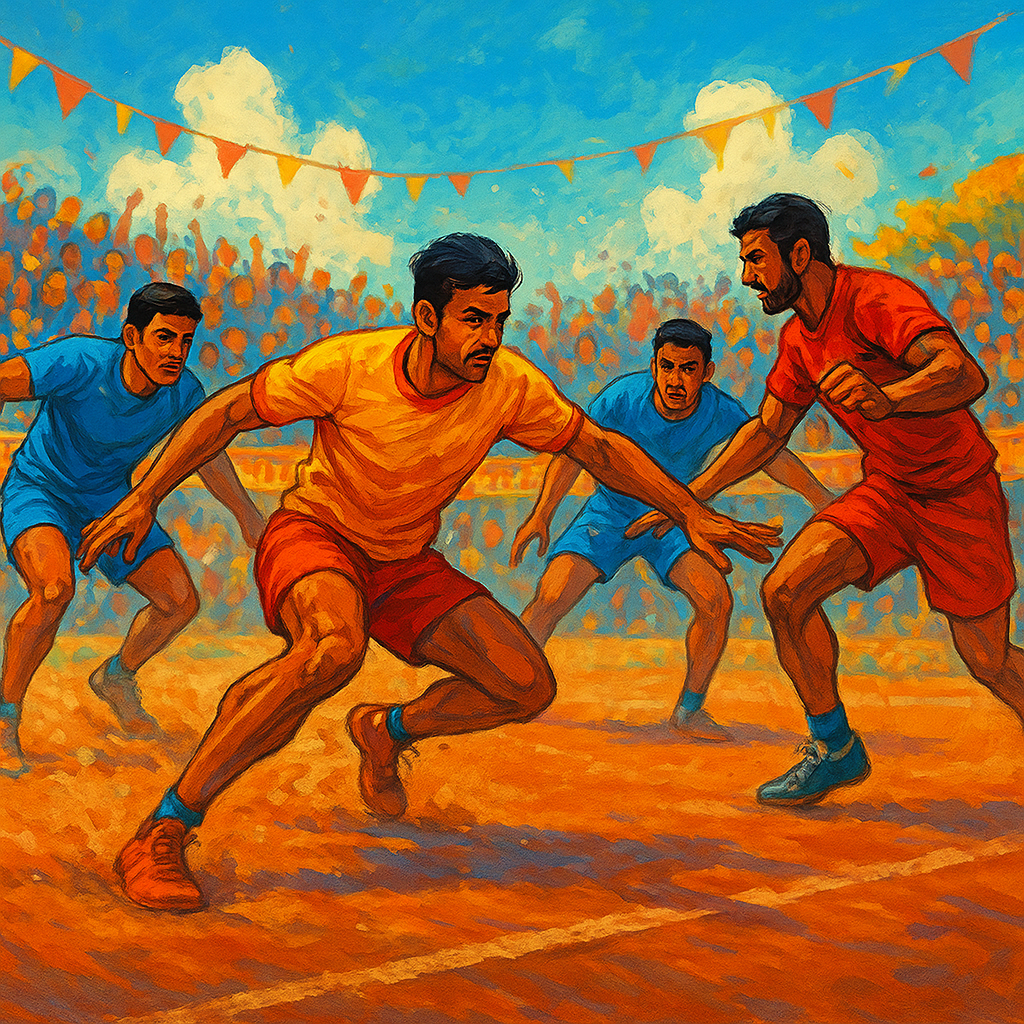
Kabaddi: A Timeless Game Rooted in Tradition and Excitement
Kabaddi, an exhilarating contact team sport, combines strategy, agility, and raw strength. It hails from South Asia and has captured the hearts of millions in India, Bangladesh, and beyond. From ancient tales to modern competitions, Kabaddi has transformed into a global spectacle, showcasing its rich history and cultural significance.
Origins and Evolution
Kabaddi traces its roots back to ancient India, with historical texts suggesting it was played during the Vedic period (between 1500 BC and 500 BC). Legendary figures like Siddhartha Gautama and Lord Krishna are said to have engaged in early forms of the sport. The origins are also speculated to be linked to Jallikattu, a traditional form of bull-taming. The game was primarily played in communal settings, serving as a means of physical exercise and sharpening reflexes.
The Modern Era
The structure and rules we recognize today began to formalize in India during the 1920s. By 1938, Kabaddi made its mark on the National Games of India, and the formation of the All-India Kabaddi Federation in 1950 further cemented its status. Demonstrated at the Asian Games in 1951, Kabaddi slowly gained recognition as an international sport. Its popularity soared with the inception of the Pro Kabaddi League (PKL) in 2014, which revolutionized the game with modern adaptations, making it viewer-friendly and commercially viable.
Game Dynamics
Kabaddi is played between two teams, each occupying opposite halves of the court. Raiders score points by tagging defenders and returning to their side without being tackled. The chant “kabaddi” must be repeated to demonstrate the raid is conducted on a single breath. Variants like “circle style” or “standard style” offer unique play environments, with variations extending to beach and indoor Kabaddi.
Recent Developments
The 72nd Senior Men’s National Kabaddi Championship recently witnessed Indian Railways clinching the title, showcasing exceptional talent and teamwork. Led by Captain Sunil Kumar, they navigated through challenges, ultimately overpowering Maharashtra in the finals. Players from the PKL, including Pankaj Mohite and Ashu Malik, demonstrated stellar performances, underscoring the synergy between national championships and professional leagues.
Cultural Significance
Besides its competitive allure, Kabaddi holds cultural significance across states, each possessing its own variant and historical ties. It’s a staple in rural sport festivals and often a point of regional pride. Nations like Bangladesh have named Kabaddi their national sport, symbolizing cultural identity and unity.
Global Influence
Kabaddi’s appeal has transcended Asian borders. With nations like Iran and South Korea making significant strides in international competitions, it’s only a matter of time before Kabaddi becomes mainstream in western sports culture. Initiatives like the Kabaddi World Cup and Asian Kabaddi Championship are propelling its recognition globally.
Pro Kabaddi League and Beyond
The PKL has played a pivotal role in modernizing Kabaddi, introducing time limits for raids, which add urgency and tactical depth to every play. The league attracts international players and millions of viewers, rivaling the popularity of sports like cricket in terms of viewership. The success story of PKL is a testament to how strategic marketing and athletic excellence can elevate a traditional sport to global prominence.
Kabaddi: A Celebration
Kabaddi epitomizes a celebration of tradition, athleticism, and regional pride. It offers a platform where ancient heritage meets modern flair, where tactics meet grit. As the sport continues to grow and evolve, it remains a symbol of cultural legacy and the indomitable human spirit.
Future Prospects
With its dynamic gameplay and burgeoning international interest, Kabaddi holds potential for wider acceptance and integration into global sports arenas. Collaborations and new leagues are continually being explored, promising an exciting trajectory for this incredible sport. Kabaddi stands as a tribute to cultural perseverance and athletic tenacity, marking its place not only in the annals of sporting history but in the hearts of those it inspires.
