
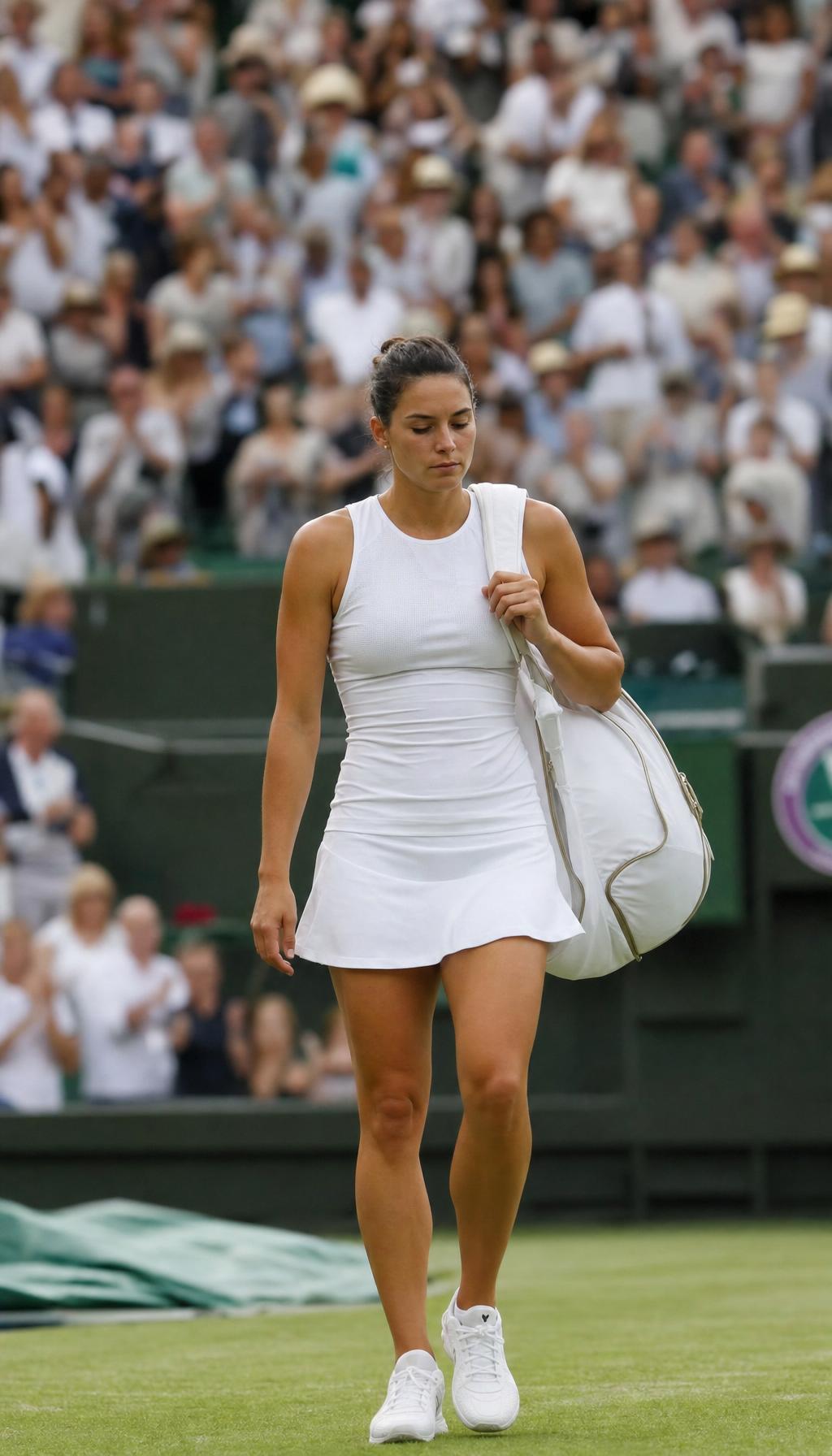
Former Wimbledon champion Marketa Vondrousova has been suspended for four years after refusing an anti-doping test, the International Tennis Integrity Agency (ITIA) announced on Monday. The ban follows an out-of-competition test attempt at her home in December, with the decision reached by an independent tribunal after a hearing held this month.
The Czech player, 26, said she refused the test amid “mental stress” and fear, claiming the testing agent “rang my door late at night without properly identifying themselves.” The tribunal, however, concluded the evidence offered “no compelling justification” for the refusal.
The ruling is significant because it removes Vondrousova from competition until 2030 and arrives just as Wimbledon is set to begin next week, placing renewed focus on the sport’s anti-doping rules and the consequences of refusing a test.
ITIA details December 2025 out-of-competition refusal
In its announcement, the ITIA said Vondrousova “did not submit a sample when notified by a Doping Control Officer (DCO) during an out-of-competition test attempt at her home at around 8 p.m. on 3 December 2025” and that she instead signed a refusal form.
The decision was made by an independent tribunal following a hearing held this month. During the hearing, Vondrousova presented explanations that stress and poor mental health had affected her decision making, along with concerns for her safety because she claimed the tester did not identify herself. The tribunal considered those points, as well as testimony from the doping control officer who attempted to conduct the test, and still concluded there was no compelling justification for refusing.
Vondrousova publicly addressed the incident earlier this year. In an Instagram post in April, she wrote that she wanted to be transparent about her mental health and described the doping control incident as happening when she “reached a breaking point after months of physical and mental stress.”
The ITIA also outlined how testing can occur outside an athlete’s nominated daily time slot. Under anti-doping rules, tennis players and other professional athletes are required to specify where they will be available for a one-hour period each day to provide samples for testing. In this case, the female testing agent arrived at Vondrousova’s home outside the assigned hour she had signed up for that day as part of a surprise test. The ITIA noted that athletes are required to submit for testing if they are located for a surprise test outside their assigned hour. If they are not found when a tester shows up outside assigned hours, there is no sanction.
ITIA CEO Karen Moorhouse said the length of the sanction reflects the structure of the rules around refusals. “We recognize this is a significant ban,” Moorhouse said, adding that the anti-doping system cannot allow a player to be “in a better place by refusing to take a test than they would by taking a test and testing positive.” Moorhouse also emphasized the role of surprise testing, saying: “Unpredictable testing is an essential tool to protect clean sport.”
The ITIA described the case as a reminder that players can be tested “at any time, in any place,” and that refusal carries “significant risk.”
Ban runs through June 2030; appeal option remains
According to the report, Vondrousova’s ban expires on June 21, 2030. She can appeal the decision to the Switzerland-based Court of Arbitration for Sport.
Vondrousova was represented by Los Angeles-based lawyer Howard Jacobs, described as a specialist in doping rules cases. The report notes Jacobs helped two-time Grand Slam singles champion Simona Halep win an appeal case in 2024 at CAS against a four-year ban for doping.
The ITIA said it would not say if any inconsistencies were found in Vondrousova’s previous anti-doping history. Nicole Sapstead, the ITIA’s senior director of anti-doping, said: “We wouldn’t disclose that,” adding: “Obviously we look at all things like that.”
Context: a major name and a wider spotlight on tennis anti-doping
Vondrousova is best known for winning Wimbledon in 2023, becoming the tournament’s first unseeded female champion when she beat Ons Jabeur in the title match. The report also notes she reached a career-high ranking of No. 6 that year and previously reached the French Open final in 2019, losing to Ash Barty.
The case also comes amid heightened attention on tennis anti-doping matters. The report describes Vondrousova as the latest high-profile player involved in a doping case after Simona Halep, Jannik Sinner and Iga Swiatek. It notes Sinner accepted a three-month ban in a settlement with the World Anti-Doping Agency at the start of last year, while Swiatek accepted a one-month suspension at the end of 2024. The report adds that Halep, Sinner and Swiatek each proved they were not entirely responsible for their positive tests.
For Vondrousova, the tribunal’s refusal finding and the resulting four-year sanction now define the immediate outlook, with the next step potentially an appeal to CAS.