
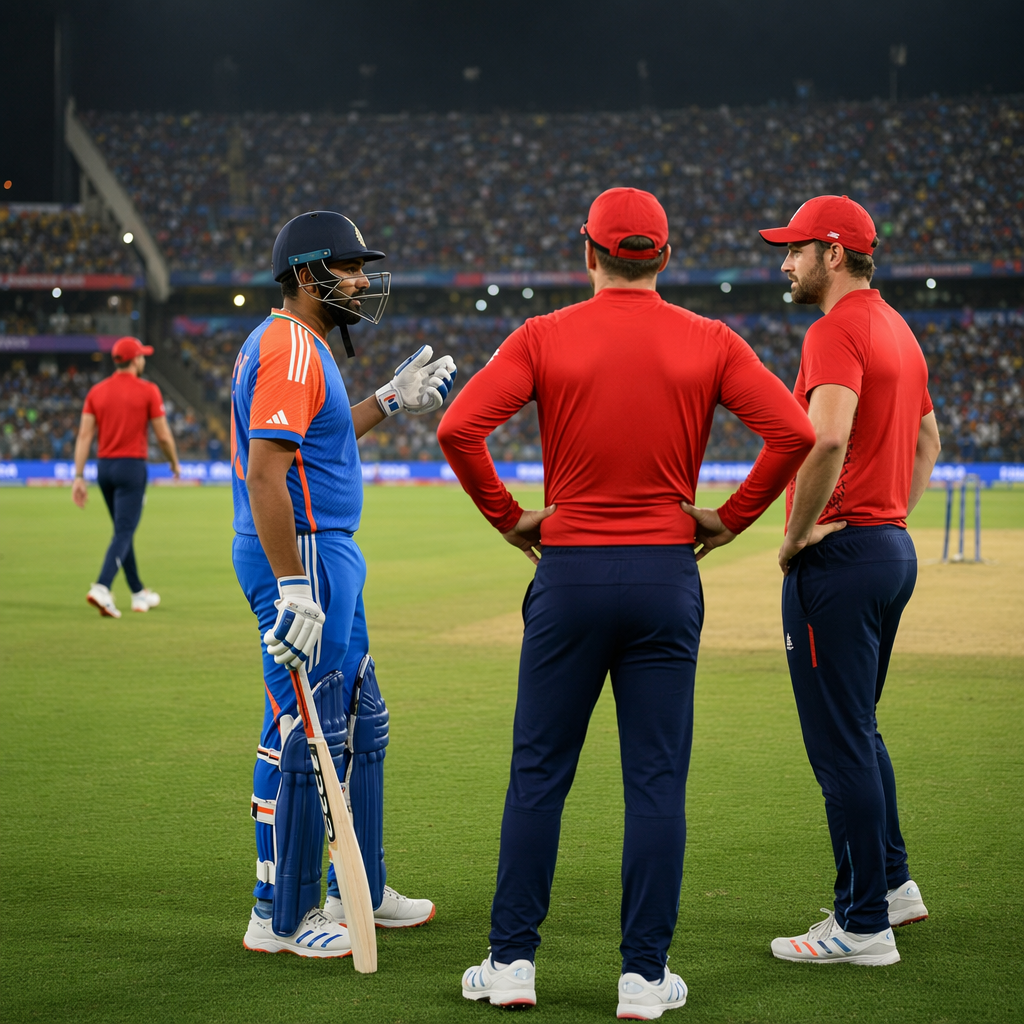
Team India’s growing injury list has come under fresh scrutiny after a report claimed recurring fitness issues are being compounded by a communication gap between the BCCI’s Centre of Excellence (CoE) in Bengaluru, the players, and the national team’s support staff. The report also suggested that several senior players are struggling to adapt to a new system following a change in personnel last year, while some are annoyed over limited communication.
The concerns surfaced after India’s ODI captain Shubman Gill publicly expressed frustration over repeated injuries following what the report described as a forgettable tour of the United Kingdom. Hamstring injuries, in particular, have become a major headache for the management, with questions raised about whether players were fully fit before taking the field.
What the report says about the CoE and fitness communication
According to the report, the recent spate of hamstring injuries has led to a belief within the setup that there may be a lack of clarity around a player’s fitness status and workload. A BCCI source was quoted as saying the injuries suggest players “may not have been absolutely fit before taking the field,” adding that there appears to be “a gap in communication about a player’s fitness status and workload between the CoE and the team management.”
The report also pointed to structural uncertainty at the CoE, noting that it is yet to appoint a head of medical staff since Nitin Patel left. It further claimed there has been “no update to the SOPs drawn up in 2023,” a detail that adds to the broader theme of a system still settling after personnel changes last year.
Beyond the immediate match-day impact, the report framed the issue as one of coordination: the team management may request players, but the medical team must present a clear picture of readiness and workload. The implication is that without consistent, shared information, decisions on selection and return-to-play can become vulnerable to misjudgment.
Players mentioned and the injury concerns raised
The report named Washington Sundar, Nitish Reddy and Harshit Rana as players who have been injured “a little too often,” using their cases to illustrate the wider concerns around workload, rehabilitation and clearance processes.
In Reddy’s case, the report said he worked with English coach Stefan Jones to improve his speed, which “raised a few eyebrows.” The source quoted in the report suggested that increasing pace needs to be a gradual process, especially when a player is with the team leading into a big event. Instead, the report claimed he was pushing himself to bowl faster whenever he was with the team.
For Harshit Rana, the report described what it called a surprising decision: that he was called up by the Indian team despite not being fully fit. The source quoted said it was “concerning” that Rana was cleared by the CoE at the insistence of the team management when he had not attained his pre-knee-injury weight, adding that such situations “need more care.”
The report also stated that Washington Sundar may have been rushed to join the T20 World Cup squad in February this year. It claimed Washington required around 10 days after joining the squad to be fit to play a match, and that being pushed to get ready during a tournament “may have taken its toll.”
Why the communication issue matters beyond tours and tournaments
A key part of the report’s focus was what happens when the BCCI medical team is not travelling with the national side. It said a number of Indian players are anxious about limited communication from the medical team during periods when they are away from the national setup.
The source quoted in the report noted that there are now very few all-format players, and that most players get decent breaks between international assignments. However, the report claimed that if players are not undergoing rehabilitation at the CoE, they can be left on their own, with “little communication.”
With injuries continuing to increase, the report’s central message is that clearer, more consistent coordination between the CoE, the team management and players is essential. As the system adjusts after personnel changes, the report suggests that communication, updated processes and well-defined medical leadership could be crucial in reducing the risk of players returning before they are fully ready.