
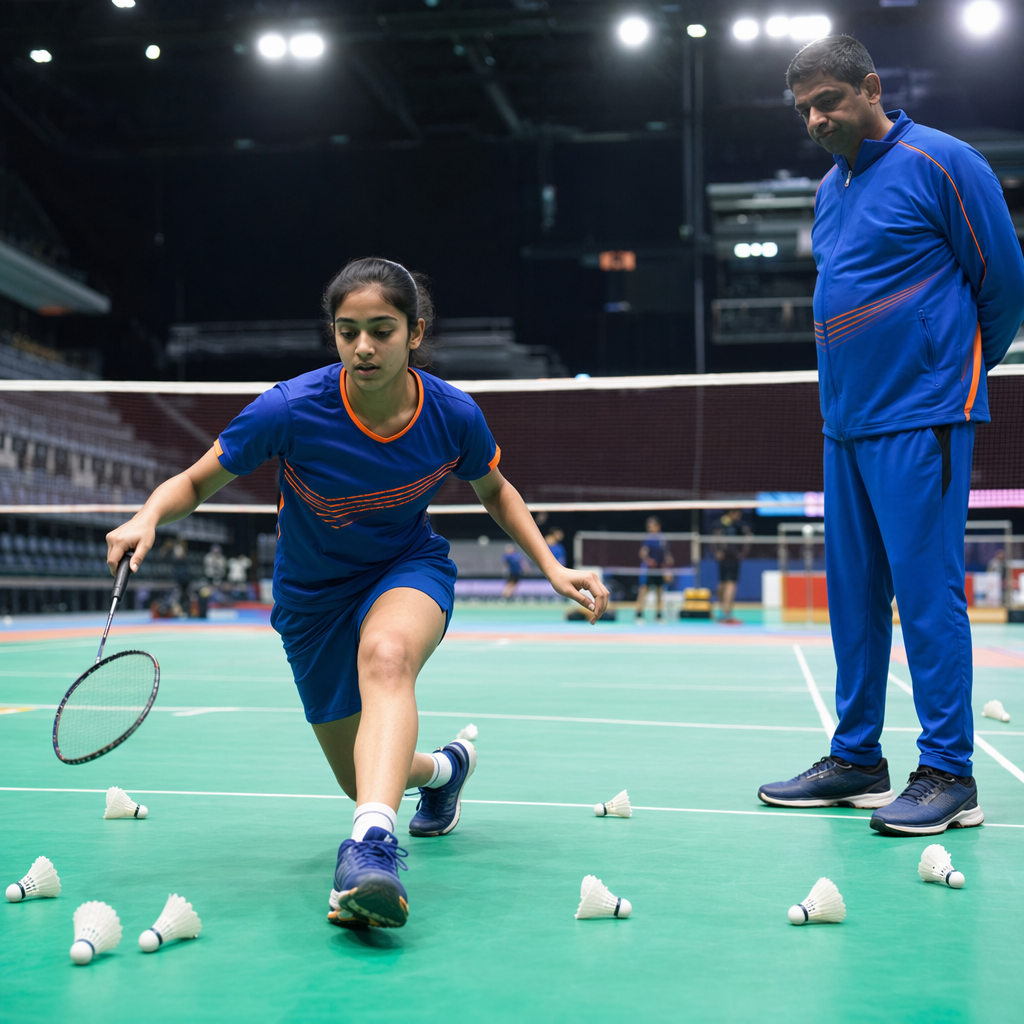
Indian badminton has already produced Olympic medalists and global stars, but coach Rohit Ranaut believes the next step is building consistency through a wider pipeline of elite athletes rather than relying on a handful of exceptional talents. In an exclusive interview, Ranaut—who has spent more than 13 years in high-performance coaching—mapped out what it will take for India to develop its next Olympic badminton champion and sustain world-class success over time.
A former national-level player who represented India internationally, Ranaut has worked across key Indian high-performance setups, including the Badminton Association of India, the National Centre of Excellence, and the Indian National Coaching Camp at the Pullela Gopichand Academy. He is also known for mentoring World No. 1 junior Tanvi Sharma and other emerging Indian shuttlers, while advocating a modern approach that integrates sports science, recovery, and mental preparation alongside technical training.
From standout stars to sustained excellence: what must change
Ranaut’s central message is that India’s challenge is no longer proving it can produce top players—it is creating a system that repeatedly produces them. He said modern badminton requires far more than technical ability, pointing to the need for tactical intelligence, physical conditioning, sports science, nutrition, recovery, and mental resilience to work together as a complete performance package.
He also stressed the importance of international exposure at an early age. According to Ranaut, playing against different styles and learning to adapt under pressure is invaluable for young athletes who want to succeed at the highest level. For India to consistently challenge for Olympic and World Championship titles, he emphasized long-term athlete development supported by stronger grassroots coaching and high-performance systems.
On the role of parents and academies, Ranaut highlighted what he sees as a common mistake: prioritising early results over long-term development. While winning junior tournaments can be encouraging, he said senior international success depends on building technical fundamentals, movement quality, decision-making, discipline, and mental toughness over many years.
He cautioned against comparisons and unrealistic expectations that can create unnecessary pressure on young players. He also noted that some academies may overload tournament schedules at the expense of systematic skill development. In his view, the best environments are those where coaches, parents, and support staff align around learning, consistency, and character, rather than chasing short-term outcomes.
Tanvi Sharma’s rise and what coaches look for
Asked about Tanvi Sharma’s rise, Ranaut said there was no single defining moment when her world-class potential became clear. Instead, he described a combination of qualities that emerged over time: discipline, eagerness to learn, and the ability to absorb feedback quickly. He added that she approached training with professionalism and focused on improvement rather than simply winning.
Ranaut explained that coaches evaluate more than results, including how an athlete responds to pressure, adapts tactically during matches, recovers from setbacks, and maintains consistency. He described it as rewarding to see Sharma progress to World No. 1 in the BWF Junior Rankings and win a silver medal at the 2025 BWF World Junior Championships—achievements he attributed to years of dedication from the athlete, coaching staff, and support system.
Training load, burnout, and the “train intelligently” principle
With the badminton calendar becoming increasingly demanding, Ranaut said the goal is not to train the hardest, but to train intelligently. He outlined the need for planned workloads that balance technical training, physical conditioning, competition, education, and recovery—adding that recovery should be treated as an essential part of performance rather than time away from training.
Drawing from his coaching experience, including work with the Indian National Team, he emphasized monitoring workload, fatigue, injury prevention, and mental well-being alongside performance. He also underlined that sometimes the best coaching decision is reducing training intensity, prioritising an athlete’s long-term career over short-term results.
A 10-year roadmap: grassroots, coaches, and integrated support
Ranaut believes India has made significant progress in sports science and analytics over the past decade. He said that during his time at the National Coaching Camp at the Pullela Gopichand Academy, the setup incorporated video analysis, individualized training plans, match-specific tactical preparation, and sports science while preparing elite athletes for major events such as the Asian Games, World Championships, and the Olympic cycle.
However, he noted that these resources remain concentrated at top high-performance centers. The next step, he said, is ensuring young athletes across India can access similar support systems regardless of where they train. He identified biomechanics, injury prevention, nutrition, psychology, match analytics, and individualized performance planning as areas that should become standard parts of athlete development, with technology complementing coaching experience.
If tasked with designing a 10-year roadmap for Indian badminton, Ranaut said he would implement three immediate changes: strengthen grassroots talent identification to ensure equal opportunity nationwide; invest significantly in coach education through continuous learning, certification, and exposure to international methods; and build an integrated high-performance pathway in which sports science, nutrition, psychology, medical support, and international tournament planning are available throughout an athlete’s development—not only at the elite level.
Ranaut also reflected on his own journey, noting he represented India at the Asian Satellite Badminton Championships and achieved a Top-15 All India Ranking in men’s singles, along with notable junior rankings. Looking ahead, he said his focus remains on developing future champions, mentoring young coaches, and helping strengthen India’s position among the world’s leading badminton nations, while embracing modern sports science and performance analytics.