
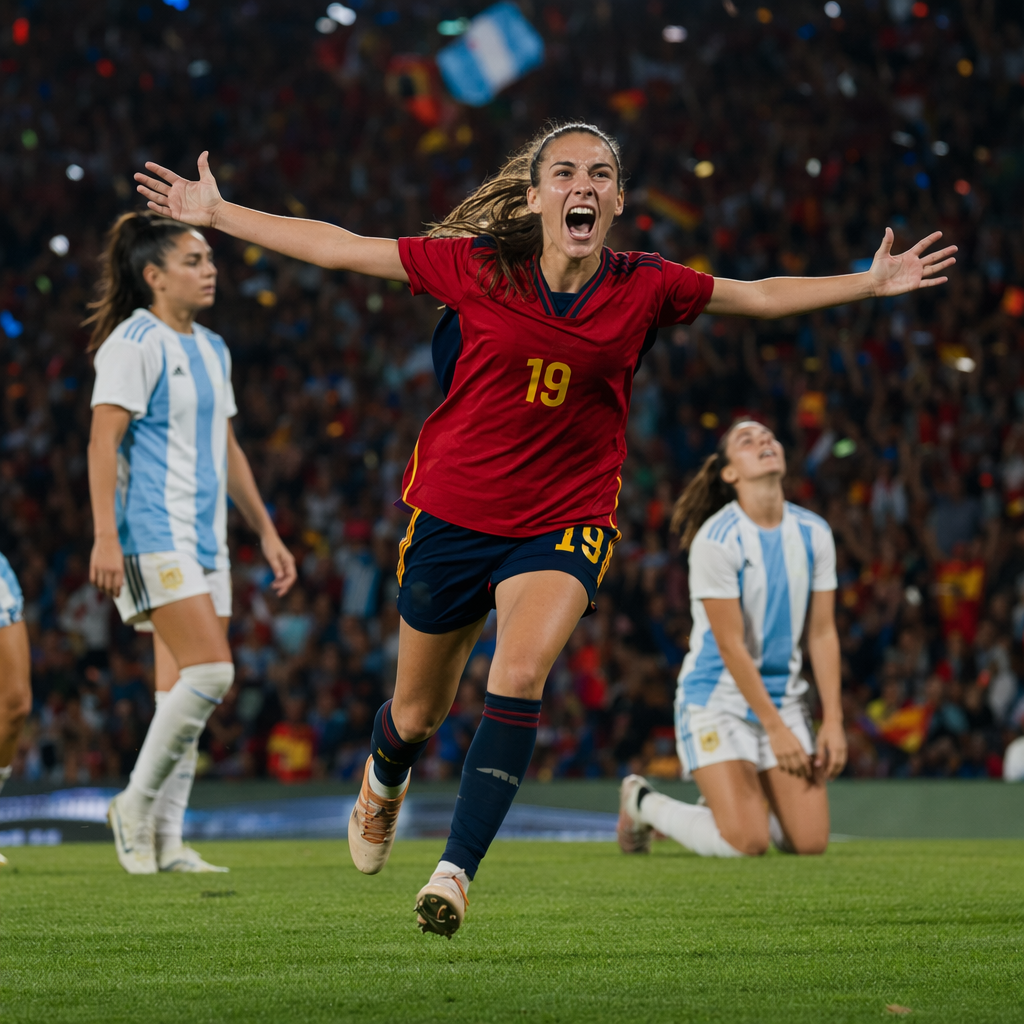
Spain are men’s world champions again after beating Argentina 1-0 in the final, with Ferran Torres scoring the decisive goal deep into extra time to secure the country’s second World Cup crown.
The match was defined by waiting and persistence: a delayed kickoff, an extended halftime break, and then 106 minutes of play before Spain finally converted their pressure into the breakthrough that settled the trophy. Spain coach Luis de la Fuente said his side had “won everything” with this generation and felt the final “should have been decided much earlier,” while acknowledging the demands of a World Cup final.
How Spain controlled the final and finally found the winner
From the opening stages in the New York New Jersey stadium, Spain looked the more dominant side. As they had in their semifinal against France, Spain controlled possession early and created the clearer moments, with teenage forward Lamine Yamal going close in the fifth minute.
Argentina’s best early opening came at the other end when Lionel Messi was beaten to a through ball by Spain goalkeeper Unai Simon. It proved to be one of the few notable moments involving Messi, 39, who was largely kept on the margins of the contest. After the match, Messi admitted Spain were better, adding that Argentina accepted the defeat while still valuing what they had achieved.
Spain continued to press through the first half, but Argentina stayed in the game through defensive resilience and goalkeeping. Emi Martinez produced a key save from a shot by Spanish striker Mikel Oyarzabal, the closest either team came to scoring before the interval.
The halftime break itself became a major talking point. For the first time in World Cup history, a Super Bowl-style halftime show was staged, with performers including Madonna, Justin Bieber and BTS. The break was extended to almost double the standard 15 minutes, described as running contrary to football convention and FIFA laws. Despite the disruption, the pattern of the match did not change after the restart: Spain passed and probed, while Argentina scrapped, hassled, and leaned on Martinez to keep Spanish efforts out.
Argentina’s task became even harder when midfielder Enzo Fernandez was sent off in injury time, leaving the South Americans with 10 men as the final moved into extra time—continuing a trend that has seen extra time in five of the last six World Cup finals.
Even with the numerical advantage, Spain had to keep searching. Argentina, who had failed to take a single shot in regulation, tired but clung on as Spain were repeatedly wasteful. But Spain’s composure—already shown through late winners in two knockout matches—held firm again when it mattered most.
The decisive moment finally arrived with Spain’s 20th shot of the match. In the 106th minute, Torres lashed home the goal that won the World Cup. Torres later said the goal belonged to “47 million people,” not just himself or the squad, and spoke of destiny being “meant” for Spain, even far from their fans.
Spain captain Rodri, named player of the tournament, lifted the trophy after the final whistle. The post-match celebrations also featured a notable political moment involving Donald Trump, who appeared keen to stay for the trophy lift, with Rodri seemingly attempting to usher him away before FIFA president Gianni Infantino moved over.
A tournament of football highlights and political shadows
The final brought an end to a World Cup that delivered plenty on the pitch, including the heroics of Cape Verde and major shocks such as Morocco and Norway toppling Brazil. Spain’s path also included a tournament opener that ended 0-0 against Cape Verde, a result that briefly fed doubts about their cutting edge.
As the competition progressed, however, Luis de la Fuente’s team combined control with improving attacking sharpness to win their first men’s World Cup since 2010. The achievement also adds to Spain’s recent international success, with Spain’s women noted as reigning world champions after winning in 2023.
Yet the tournament was also marked by political controversy. The report referenced the impact of the Iran war, restrictions that prevented Iran’s fans from entering the United States, and Iran being forced to fly in and out of games with less preparation time. It also pointed to Donald Trump’s intervention in the suspension of a red card ban for Folarin Balogun, amplifying questions about FIFA’s independence.
In the end, though, the World Cup was decided the familiar way: by a single goal in a final. In New Jersey, Spain’s patience and control were rewarded, and Torres’ extra-time strike ensured the trophy went to Spain once again.