
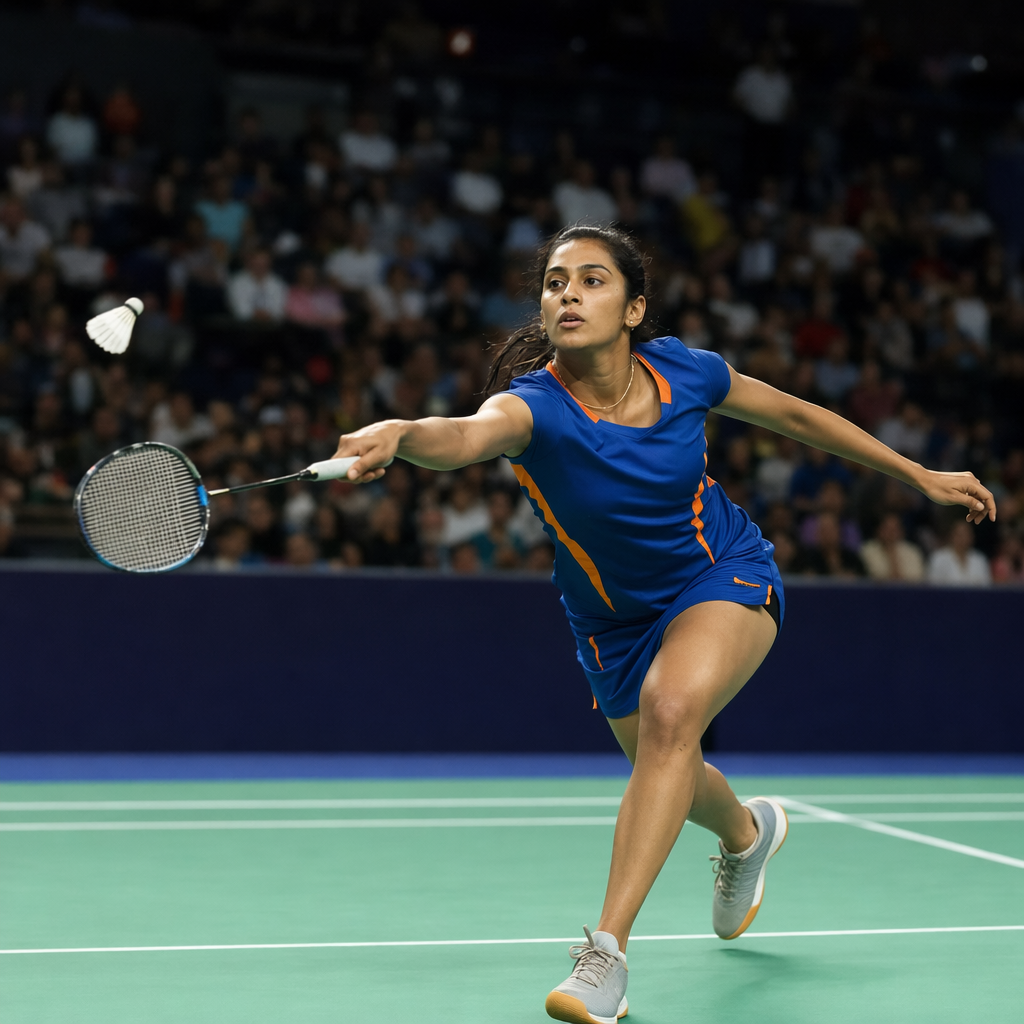
PV Sindhu delivered a landmark Japan Open title in Tokyo, beating Japan’s Akane Yamaguchi in straight games to end a wait of more than a year for silverware and underline her return to the sport’s biggest stages. The win also capped a steady climb back into the world’s top 10, with Sindhu rising from No. 18 to No. 9 in 2026.
At 31, Sindhu’s latest title is significant not only for the trophy but for what it represents after a stretch of adversity. She has continued to grind through the demanding BWF tour despite being unseeded at times and facing tougher draws, often playing well but falling short late against younger opponents. In Tokyo, she finally had the result to match the work she has been putting in for months.
“I had tears in my eyes because it was very, very important for me to win,” Sindhu said after the final. “I was really working hard on myself and kept believing that I could do it. Even though a lot of people were asking what was happening, I still believed in myself, my family, my coaches and my support staff.”
How Sindhu turned the Japan Open final in Tokyo
The final against Yamaguchi showcased Sindhu’s resilience and improved closing ability. She outlasted Yamaguchi after trailing early, then surged to take the opening game 21-17. The key moment came when she tied the score at 17-17 before pushing ahead to claim the game.
The result carried added weight given recent head-to-head setbacks. Sindhu had lost to Yamaguchi in the semifinals of the Australian Open and in the quarterfinals of the Thailand Open about a month earlier. This time, the pattern flipped: Sindhu looked fresher and more attacking, took an early lead in the second game, and maintained it to wrap up the title in straight games.
There were still patches where unforced errors and some questionable judgement calls threatened to pull momentum away, but Sindhu steadied herself and kept her focus on the finish. The championship point itself reflected that sharpness, arriving through a “good leave” and a correct review, a detail that underlined how locked in she was at the end of the match.
The Japan Open win also resonated because of where it came. Tokyo is the city where Sindhu created history with a second Olympic medal in 2021, and this title adds another major chapter there as she continues to push her career forward.
Incremental growth finally matched by a trophy
Throughout 2026, Sindhu’s progress had been visible even when results didn’t fully follow. The article notes improvements in her footwork, shot depth, and line judgement compared to the last couple of years. That rebuilding process was necessary after a drop-off following an injury layoff in 2022, despite her status as a five-time World Championship medallist and two-time Olympic medallist.
Her season also shows how narrow the margins have been at the top. Many of Sindhu’s losses this year have come against the very best in the world: World No. 1 An Se Young (twice), World No. 2 Wang Zhi Yi, World No. 3 Yamaguchi (twice), and World No. 4 Chen Yu Fei, along with what was described as an occasional shock loss.
One match highlighted was the Singapore Open quarterfinal against An Se Young, where the scoreline of 21-17, 21-14 did not reflect how close the contest was. The piece notes the South Korean had to find a higher gear to win, illustrating that Sindhu’s level has been rising even when she has not been getting over the line.
What the Japan Open win means with Worlds in New Delhi next
The timing of the Japan Open title is particularly important, with less than a month to go before Sindhu plays the BWF World Championship at home in New Delhi. The World Championships have long been a defining arena for her, dating back to her first medal as a 17-year-old, and she is now aiming to peak again.
The article also notes the intensity of the Japan Open draw, with all top players present and the toll of the tour evident as Chen Yu Fei (in her semifinal against Sindhu), Nozomi Okuhara (in her quarterfinal against Sindhu), and An Se Young (against Okuhara) retired with injuries. Sindhu, however, managed to stand out and also beat world No. 5 Han Yue in the second round. While walkovers were acknowledged as a factor, the piece frames Sindhu’s fitness and persistence as central to taking advantage of the opportunity.
Now back in the top 10 and with a major title secured, Sindhu heads toward New Delhi with momentum and the prospect of chasing a record sixth World Championship medal, this time with a home crowd behind her.