Aug 14, 2026
Diving Chess Gains Momentum as ESPN Ocho Returns to the Pool
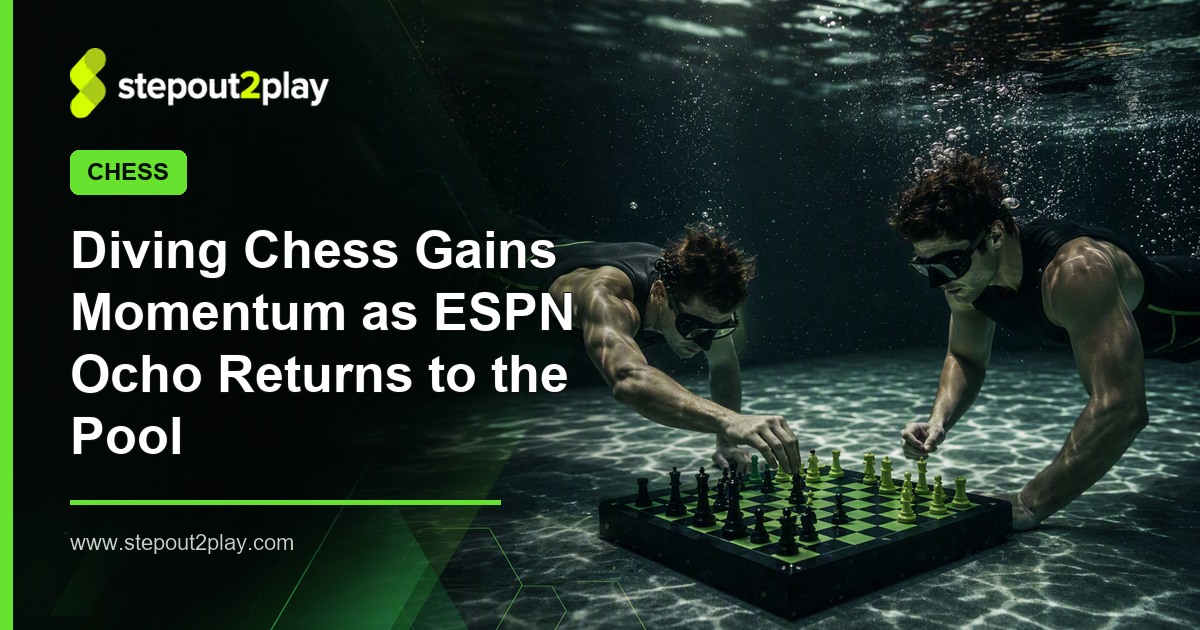
Diving chess is continuing to build an audience as ESPN Ocho features the unusual discipline for a second straight year, bringing greater attention to a game that asks players to manage both a submerged chessboard and the physical demands of staying underwater.
The format was created by Etan Ilfeld after he saw chess boxing, which alternates chess and boxing rounds. Ilfeld wanted to develop a physical version of chess that did not depend on body size or other physical characteristics. The result was diving chess, in which the outcome is still decided on the board but players must also control their breathing, reach the board and remain comfortable in the water.
The sport has attracted players ranging from novices to established grandmasters. Americans Hans Niemann and Fabiano Caruana, India’s Vidit Gujrathi and Cuban American grandmaster Leinier Domínguez have all played diving-chess matches. Lithuanian grandmaster Paulius Pultinevičius won the world championship in Poland in May.
Chess strategy meets underwater demands
The central challenge is straightforward in concept but demanding in practice. Players must hold their breath underwater while making chess decisions, including recognizing tactical ideas such as forks and deciding when to castle. Breath control and comfort in the water are basic requirements, while pool conditions can add further difficulty.
There is no fixed water temperature for matches. Events are usually held indoors, meaning pools can be on the cooler side and create another element for players to manage. Even so, Ilfeld has stressed that the decisive factor remains the chessboard.
Getting down to the board is also a skill in its own right. Because people naturally float, players need to sink in a controlled way, using a combination of exhaling and swimming downward. Dropping too quickly can reduce the time a player is able to stay underwater. Ilfeld said the routine of going underwater and staying close to the board takes a couple of hours to learn.
Domínguez adapted so effectively that he once bumped into the bottom of the pool after descending too fast during a match. His experience underlines the unusual balance required in diving chess: players must avoid wasting breath and movement while still leaving themselves able to think clearly about the position.
The equipment is another essential part of making the sport work. Ilfeld has been sourcing and creating sets that can remain submerged for up to eight hours. The board is magnetized and made from dense plastic so that it naturally sinks and stays in position without extra weights. It weighs around four pounds, while the pieces collectively weigh about two pounds and are also magnetized.
A standard chess set fitted with magnets would not provide the same stability, because movement in the water could still dislodge the pieces. The purpose-built board is designed to keep the position intact while players dive down to make their moves.
A growing stage for diving chess
According to Ilfeld, the sport’s momentum has increased over the past eight months and its growth has been organic. Matches have been held in Cape Town, St. Louis and the Netherlands, expanding the game’s footprint beyond a single location.
Diving chess has also received recognition from chess and media audiences. The World Chess Hall of Fame included it in an exhibit titled Game Plan: The Strategy of Chess & Sports. Levy Rozman, who describes himself as “the internet’s chess teacher,” highlighted the discipline on his YouTube page and called it “the strangest sport in the world.”
The latest ESPN Ocho event placed former diving chess world champion Michał Mazurkiewicz and Ilfeld in an underwater cage in South Africa while sharks swam around them. For Ilfeld, such events are part of an effort to keep the game moving forward, one checkmate at a time.